
Getting around in major cities
When visiting a city, determining how you get around can be daunting at first because you have a long list of things to do, and not that much time to do it.. It’s unlikely you will rely on only one method of transport, but which is best?
Many people like to walk, and there is no doubt that this is the most intimate way to experience a city – up close and without barriers. However to rely on foot power alone can wear you out quickly if you are not in great shape, and can limit the amount you can see on your holiday. Look at your destination’s geographic layout, and ask yourself how much can I do on foot, and when should I leave the driving to someone else? Be realistic, factor in how much abuse your feet can take in one day, and equally important, how much more time is it going to take compared to using a conveyance? There are places where walking is definitely the best way. The great Italian cities of Rome, Florence or Venice can be easily navigated on foot, and what better way to experience their charms. All three have public transit, or other means, to get around, but it is not absolutely essential unless you have mobility issues. Try to strike a balance, if possible, between your to do list and your energy level. You can blitz Paris or London in a day or two by efficient use of its subway, but you would be missing out on the city’s shops, cafes and visual ambiance. Relax, it’s a holiday. It’s not about how many selfies you can take in front of major monuments in one day.
Public transit offers a fast and convenient way to plot out your day, but it does require you to acquaint yourself with the route system and frequency to determine your most time efficient and user friendly route. Grouping your day’s stops by focusing on an area is never a bad idea, even if you have to include lower priority sites to fill out your day plan. Finally, have a look at how close your destination is to the subway exit, or bus stop. Even using Google Maps, distances can be deceiving, and what seems like a short walk may use up more time and energy than expected. For example, cities like London or Paris may be best appreciated on foot, but are larger than they appear initially, and are best navigated using their first-class subway systems. If cost is a concern, investigate the transit system fare options. Invariably, there is some tourist friendly option that will save you both time and money. This can come in the form of multi-day transit passes such as the Paris Visite, New York MetroPass, or with the Berlin Welcome Card. Another approach are re-loadable cash cards such as London’s Oyster Card, Toronto’s Presto, Boston’s Charlie Card or Tokyo’s Suica or Passmo. It is debatable as to which is more cost effective, so check into it before committing. Whatever you do, avoid buying individual fares, unless there is no other way.
If you prefer a taxi you will get the benefit of direct point to point transit, which is certainly convenient, however, it’s not always efficient. Before committing, consider the distance and traffic on route to your destination. Anyone who’s witnessed the traffic snarls in downtown London can attest to the notion that it is often faster to walk, and definitely faster to take the subway. Paris is not as problematic for driving, but its subway system stops are arranged so close to it’s major tourist sites it makes no sense to us taxis. At the other extreme, great expanses of urban sprawl like Los Angeles are definitively not walk-able, and not as easy to get around in by public transit, despite a steadily improving transit system. You can do an LA holiday via public transit, but this is one city where you’re likely better off to take a cab. If budget is a concern, you have to weigh convenience versus cost. In general, taxis are by far the most expensive option by comparison to public transit, but may only provide a marginal time saving advantage. However, if time is short
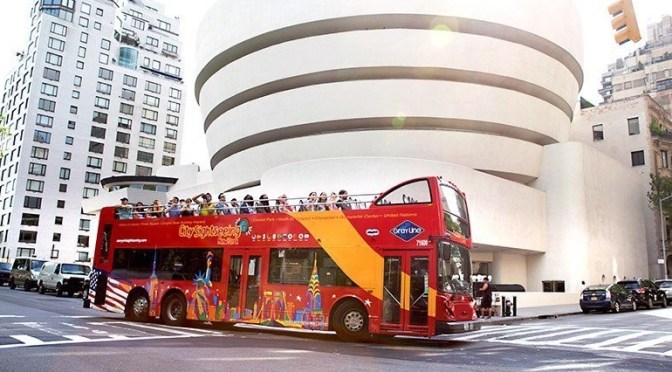
So when is it a good idea to use tours? Actually, just about any time. Tours in most major tourist centres can encompass everything from neighborhood walking tours to fully escorted excursions, often including meals. Budget and time will dictate just exactly how much of it you wish to do, but it is worth investigating all the available options. I’ve made frequent use of the hop on hop off bus tours offered in almost all major cities. It essentially combines the benefit of public transit, but with guided commentary (usually recorded audio in multiple languages) focused around only the most popular tourist sites. Though much more expensive than public transit, Hop on Hop off is especially convenient if you are short of time and want to cover a lot of ground. I have also found them especially good for overseas trips where you may be suffering jet lag on the first day or two. Hop on, enjoy the view from relative comfort, and get off only when you want to, or just stay on depending on how you feel. Though hop on hop off services are quite similar, the quality of service can vary a lot from one place the next. In North America, you can expect to see either the double-decker open top variety, or the smaller trolley bus. From a tourist perspective the only real difference is that the open top version offers a better view. If you’re taking pictures, you can do pretty well either way provided that the windows are down, the weather is nice and you’re quick on the draw. In Europe, you tend to see more of the open top double-decker and fewer trolleys, but may also encounter everything from miniature trains to motor coaches. One tip for the avid photographer: Scope out the route in advance to determine which side of the bus to sit on. If in doubt, try to sit on the left side since this will give you a wider, better view than if you sat on the right side, which leaves little distance between you and the sidewalk. This rule applies on to cities where people drive on the right side of the road. In the UK or Japan, you would probably want to reverse the position.
I’ve made frequent use of the hop on hop off bus tours offered in many major cities. It essentially combines the benefit of public transit, but with guided commentary (usually recorded audio), and aimed at only the tourist sites you have come to see. Though much more expensive than public transit, Hop on Hop off is especially convenient if you are short of time and want to cover a lot of ground. I have also found them especially good for overseas trips where you may be suffering jet lag on the first day or two. Hop on, enjoy the view from relative comfort, and get off only when you want to, or just stay on depending on how you feel. Though hop on hop off services are quite similar, the quality of service can vary a lot from one place the next. As a low vision traveler, there are few things you need to keep in mind with them however. In North America, you can expect to see either the double-decker open top variety, or the smaller trolley bus. From a tourist perspective the only real difference is that the open top version offers a better view. If you’re taking pictures, you can do pretty well either way provided that the windows are down, the weather is nice and you’re quick on the draw. In Europe, you tend to see more of the open top double-decker and fewer trollies, but may also encounter everything from miniature trains to motor coaches that perform the same function.
The cost of transportation can vary greatly from place to place, and it is worthwhile to examine all options to determine your most cost efficient option. Walking may be free, but if you investigate you may find that public transit can be purchased at a very reasonable cost. Visiting the city transit site is well worth it. Not only do you gain invaluable detail about your destination, you can look up the available fare options to see what best suits your budget, or what is most convenient. For example, nearly every city offers multi-day passes that offer a convenient way to use transit without having the hassle of purchasing individual tickets. Paris and New York City Transit system offer this this type of pass. Frequently, Tourist information centres and related attractions sell omnibus travel passes such as City Pass that include free public transit as well as discounted, free or express admission to many sites. I have used this in here in Toronto, and San Francisco where you can ride the cable car at will for up to 7 days. Often there are multiple competing passes in major destinations so it is worth it to shop around. New York Pass and London Pass both worked well for me in terms of transit coverage. Conversely, many cities have re-loadable cash cards that allow you to transit the city with peace of mind. London offers the Oyster Card. In Toronto, its called Presto, while in Boston, its called the Charlie Card.
Not every part of your holiday may be within the city limits. In a future blog, I will look at the benefits of day trips and excursions.
 To the Ends of the Earth